

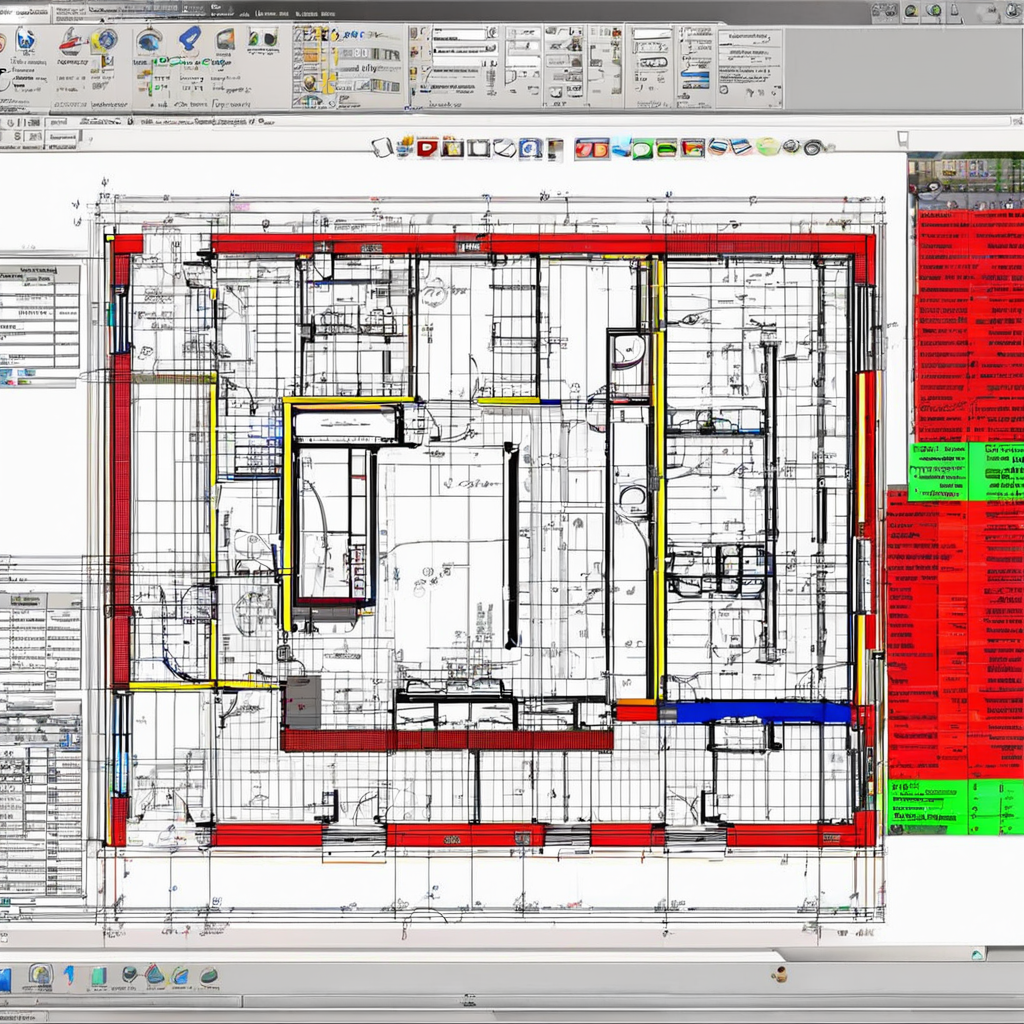
CAD Software has revolutionized the way designers, engineers, architects, and various professionals create and visualize their projects. With the advancement of technology, Computer-Aided Design software has become an essential tool in the modern world. CAD software allows users to create precise and detailed designs in a digital format, streamlining the design process and increasing productivity.
One of the key features of CAD software is its ability to produce accurate and consistent designs. By using mathematical equations and algorithms, CAD software ensures that every component of a design aligns perfectly, reducing the margin of error significantly. This level of precision is crucial, especially in industries where even the slightest miscalculation can have serious consequences.
Another advantage of CAD software is its versatility. Whether you are designing a complex building structure, a prototype for a new product, or even a piece of machinery, CAD software can adapt to various design requirements. With a wide range of tools and functionalities, users can customize their designs to meet specific criteria and constraints, making the software suitable for a diverse range of industries.
CAD software also offers collaborative features that enable multiple users to work on the same project simultaneously. This real-time collaboration not only enhances teamwork but also accelerates the design process by allowing instant feedback and revisions. Furthermore, cloud-based CAD platforms enable users to access their projects from anywhere, facilitating remote work and improving overall efficiency.
In addition to 2D drafting, modern CAD software provides advanced 3D modeling capabilities that allow users to create realistic and immersive designs. By visualizing projects in 3D, designers can better communicate their ideas and concepts, leading to improved decision-making and client engagement. The ability to generate 3D renderings also helps in identifying potential design flaws early in the process, reducing costly errors later on.
CAD software plays a crucial role in the manufacturing industry by facilitating the creation of detailed schematics and blueprints for production. By integrating with Computer-Aided Manufacturing (CAM) software, CAD programs can directly translate designs into machine instructions for automated manufacturing processes. This seamless workflow not only saves time but also ensures accuracy in the production of complex components and assemblies.
The evolution of CAD software has also led to the development of specialized tools for specific industries, such as architecture, automotive, aerospace, and electronics. These industry-specific CAD programs cater to unique design requirements and standards, allowing professionals to optimize their workflow and achieve superior results. Furthermore, CAD software continues to evolve with new features and updates that enhance usability and performance.
One of the challenges of using CAD software is the learning curve associated with mastering its tools and functionalities. While modern CAD programs offer user-friendly interfaces and tutorials, acquiring proficiency in complex software can take time and practice. However, investing in training and skill development can significantly improve productivity and efficiency in the long run, making it a worthwhile endeavor for professionals in design-related fields.
Despite its advantages, CAD software is not without limitations. One common issue is compatibility between different CAD platforms, which can hinder collaboration between users working on different software versions. Additionally, the cost of high-end CAD software licenses and upgrades can be prohibitive for small businesses and independent designers, limiting access to advanced design tools.
In conclusion, CAD software has become an indispensable tool for designers and engineers across various industries, revolutionizing the way projects are conceptualized, developed, and executed. With its precision, versatility, collaborative features, and 3D modeling capabilities, CAD software empowers professionals to create innovative and efficient designs that meet the demands of a rapidly evolving market. Despite challenges such as the learning curve and compatibility issues, the benefits of using CAD software far outweigh the drawbacks, making it a valuable investment for those seeking to enhance their design workflow and productivity.